When planning a new shed, most people focus on size and layout, but the shed roof plays an equally important role. The roof affects how well the structure holds up over time and how it looks in your backyard. From handling weather to defining the overall style, the right roof choice can make a big difference in performance and appearance.
Shed roofs come in a variety of styles, but when it comes to materials, the choice usually comes down to two options: shingle or metal. Each offers its own benefits, and the best option depends on how you plan to use the shed, your local climate, and the look you want to achieve. In this blog, we will explore how shed roof styles and materials impact durability and style so you can make a confident decision.
Why Your Shed Roof Matters More Than You Think
A shed roof does more than simply cover the structure. It plays a key role in protecting everything inside and helping the shed stand up to years of use and changing weather. The right roof design can improve durability, reduce maintenance, and extend the life of the shed.
Roof style affects how well water, snow, and debris move off the structure. A properly designed shed roof helps prevent pooling, leaks, and long-term wear. Over time, this can make a noticeable difference in how well the shed performs and how much upkeep it requires.
The roof also impacts the overall look of the structure. Its shape, slope, and material help define the structure’s style and how it fits into your property. Choosing the right shed roof means balancing strength, protection, and appearance from the start.
Common Shed Roof Styles and Their Benefits
Shed roof styles are designed to support both function and appearance. The shape and slope of the roof influence how the structure handles weather and how it complements your property.
Some roof styles focus on simplicity and efficiency, making them practical for everyday storage and workspaces. Others add visual interest and extra overhead space, which can be useful for taller equipment or loft storage.
In general, shed roof styles are chosen based on:
- How well the roof sheds rain and snow
- The amount of headroom or interior space needed
- The overall look you want the shed to have
Choosing the right roof style helps ensure the shed performs well while also matching the surrounding landscape and structures.
Shingle vs Metal Shed Roofs: What’s the Difference?
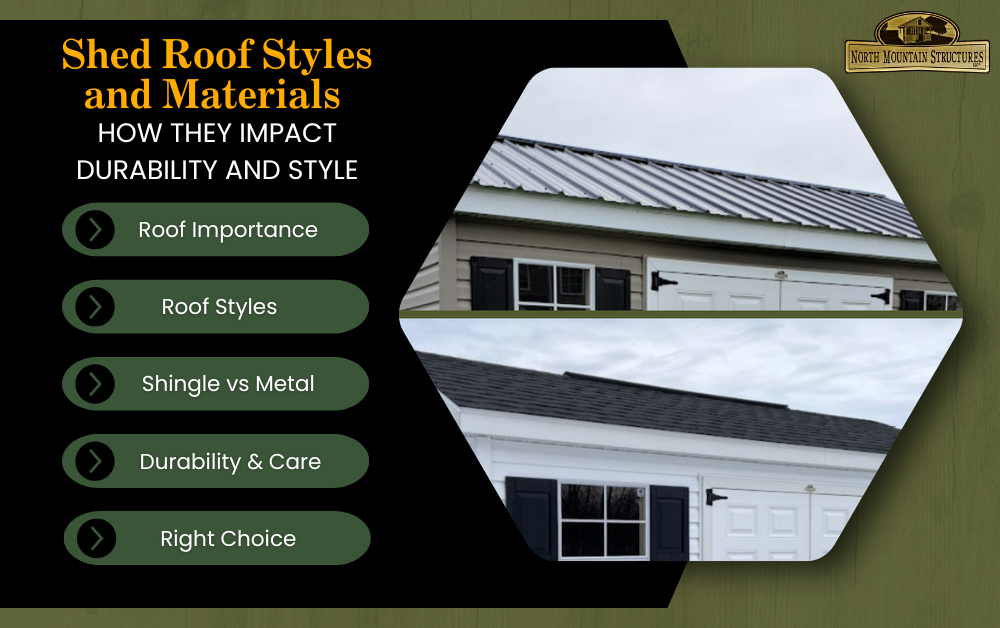
When it comes to shed roofing materials, most homeowners choose between shingle and metal. Both options protect the structure well, but they differ in durability, appearance, and long-term upkeep.
Shingle Shed Roofs
Shingle roofs offer a classic look that often matches nearby homes. They blend easily into residential settings and provide solid protection when properly installed. Shingle shed roofs are a popular choice for homeowners who want a traditional appearance and a roof that feels familiar.
Metal Shed Roofs
Metal roofs are known for strength and longevity. They handle harsh weather well and shed rain and snow quickly. A metal shed roof also brings a clean, modern look and often requires less maintenance over time.
Understanding these differences makes it easier to choose a roofing material that fits both your needs and your property style.
How Shed Roof Materials Affect Durability and Maintenance
The material you choose for your shed roof has a direct impact on how the structure holds up over time and how much upkeep it will need. Both shingle and metal roofs protect the shed, but they perform differently as the years go on.
Shingle shed roofs tend to require more routine attention. Over time, exposure to sun, wind, and moisture can cause wear that may need occasional repairs or replacement. For many homeowners, this tradeoff is worth it for the familiar look and strong initial protection.
Metal shed roofs are built for long-term durability. They resist cracking, warping, and moisture damage, which helps reduce maintenance needs. Because metal sheds water and snow more efficiently, it often performs well in areas with changing weather or heavier seasonal conditions.
Choosing the right roofing material means thinking beyond installation day and considering how much maintenance you want to handle over the life of the structure.
Choosing the Right Shed Roof for Your Property
Selecting the right shed roof comes down to how the structure will be used and the conditions it will face over time. A shed used for simple storage may have different needs than one designed as a workshop or hobby space.
Property layout and exposure also matter. Sun, wind, and nearby trees can all influence how a the roof performs. In areas with heavy rain or snow, roof style and material play an even bigger role in long-term durability.
Balancing function, appearance, and maintenance expectations helps narrow the choice. By considering how the structure fits into your property and how you plan to use it, you can choose a shed roof that delivers both reliable performance and the look you want.
Conclusion
Your shed roof plays a bigger role than many homeowners realize. From protecting the structure to shaping its overall appearance, the right roof style and material can have a lasting impact on durability and performance. Whether you choose a shingle or metal roof, the best option is the one that fits your property, your climate, and how you plan to use the space.
If you are planning a new shed or upgrading an existing one, North Mountain Structures can help you choose the right shed roof and design a structure that meets your needs. Reach out to their team to explore options and start planning a shed built to last.