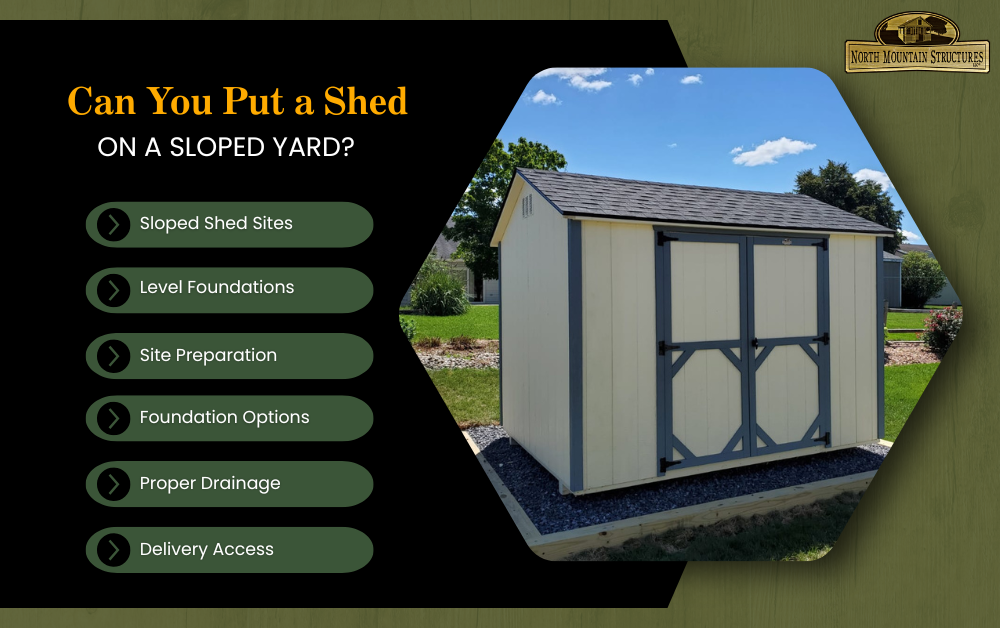
You find the perfect spot for a new shed, measure the area, and start picturing a cleaner garage and an organized backyard. Then you notice one problem: the ground is not level. Fortunately, having a sloped yard does not automatically rule out installing a shed. With the right foundation, drainage plan, and site preparation, you can create a stable location for your new structure. This blog explains what you need to consider before moving forward.
Can You Put a Shed on a Sloped Yard?
Yes, you can put a shed on a sloped yard, but the structure should not sit directly on uneven ground. The installation area must be prepared so the shed rests on a level, stable foundation. Without proper preparation, the shed could shift over time, develop uneven floors, or have doors and windows that no longer open correctly.
The amount of site preparation required depends on the slope. A gentle incline may only need minor excavation and a compacted gravel base. A steeper sloped yard could require additional grading, retaining materials, piers, or another professionally designed foundation. The soil conditions, shed size, drainage, and intended use will also help determine the best approach.
Why Does a Shed Need a Level Foundation?
A level foundation supports the entire shed and helps it remain stable as the ground settles and weather conditions change. Even when a shed is installed on a sloped yard, the finished foundation must provide a flat and dependable surface.
Structural Stability
An uneven foundation can place more weight on one section of the shed than another. Over time, this uneven pressure may cause the floor to sag, the walls to shift, or the roofline to become distorted. A level foundation distributes the shed’s weight more evenly and helps preserve its structural integrity.
Properly Working Doors and Windows
When a shed shifts or sits unevenly, its frame can move out of alignment. Doors may stick, drag along the floor, or fail to latch properly. Windows may also become difficult to open and close. Starting with a level base helps these features continue working as intended.
Moisture Protection
A properly constructed foundation helps prevent water from collecting beneath the shed. It also keeps the floor and framing away from damp soil, reducing the risk of rot, mold, and moisture damage. This protection is especially important on a sloped yard, where runoff naturally moves downhill and may travel toward the structure.
How Can You Prepare a Sloped Yard for a Shed?
Preparing a sloped yard involves creating a level, stable area that can support the shed while directing water away from it. The exact process will depend on the steepness of the slope, the soil conditions, and the size of the structure. Common preparation steps include:
- Measure the complete footprint: Mark the shed’s dimensions and include additional space around the structure for the foundation and future maintenance.
- Evaluate the slope: Determine how much the elevation changes across the site. A significant change may require professional grading or additional structural support.
- Clear the area: Remove grass, roots, rocks, branches, and other debris that could interfere with the foundation.
- Level the installation site: Excavate the higher side, build up the lower side with compacted material, or use a combination of both methods.
- Prepare the foundation: Install a suitable base, such as compacted gravel, concrete, or another support system recommended for the site.
- Plan for drainage: Grade the surrounding ground so rainwater flows around and away from the shed instead of collecting underneath it.
- Confirm delivery access: Make sure the installation crew can safely reach the prepared site with the shed and any necessary equipment.
The foundation should be completed and checked before delivery day. Careful preparation helps prevent delays and gives the shed the stable base it needs to perform well over time.
What Foundation Is Best for a Sloped Yard?
The best foundation for a shed on a sloped yard depends on the steepness of the ground, soil conditions, shed size, and how the building will be used. While a gravel pad may work well for a gentle slope, a larger structure or steeper site could need a more substantial solution.
Gravel Foundation
A compacted gravel foundation is a common option because it provides support while allowing water to drain away from the shed. The site may need to be excavated on the higher side and built up on the lower side to create a level base. Proper edging helps hold the gravel in place and reduces erosion.
Concrete Foundation
A concrete pad creates a solid, permanent surface for a shed. It may be suitable for larger buildings, workshops, or sheds that will hold heavy equipment. However, installing concrete on a slope often requires more excavation, forms, and site preparation, which can increase the project’s cost.
Piers or Other Support Systems
Steeper slopes may require piers, retaining walls, or another professionally designed support system. These options can create a level surface without extensively changing the surrounding landscape. Because improper support can cause the shed to shift or settle unevenly, homeowners should have challenging sites evaluated before selecting a foundation.
How Do You Manage Drainage Around a Shed?
Water naturally travels downhill, so drainage requires extra attention when installing a shed on a sloped yard. If runoff flows toward the structure, it can collect around the foundation, wash away supporting material, and expose the shed to ongoing moisture. The site should be graded so water moves around and away from the building.
A compacted gravel base can improve drainage by allowing water to filter away instead of pooling beneath the floor. Depending on the property, swales, French drains, or other drainage features may also help redirect water coming from uphill. Larger sheds can benefit from gutters and extended downspouts that carry roof runoff away from the foundation.
Drainage should be planned before the shed is installed rather than addressed after water problems appear. A properly prepared site protects the foundation from erosion and reduces the risk of rot, mold, settling, and other moisture-related damage.
What Should You Check Before Shed Delivery?
A properly prepared site helps the delivery crew place the shed safely and efficiently. Before delivery day, confirm the following:
- The foundation is complete, level, and large enough for the shed.
- The delivery route is wide enough for the structure and installation equipment.
- Fences, gates, vehicles, branches, wires, and other obstacles are out of the way.
- The ground along the delivery route is firm and stable.
- The delivery team knows about the sloped yard and any potential access challenges.
- Local permits, property setbacks, and neighborhood requirements have been addressed.
Reviewing these details in advance can prevent delays, additional site work, or difficulties placing the shed in its intended location. If you are unsure whether the route is accessible, discuss the property with the delivery team before finalizing your order.
Make Your Sloped Yard Work for Your Shed
A sloped yard does not have to prevent you from adding the storage or workspace you need. With a level foundation, proper drainage, careful site preparation, and a clear delivery route, many uneven properties can safely accommodate a shed. Planning these details before installation can help prevent shifting, moisture damage, and other long-term problems.
North Mountain Structures offers custom and pre-built sheds in a variety of sizes and styles. Contact North Mountain Structures to discuss your property, explore your shed options, and plan a smooth delivery to your prepared site.