A shed is only as strong as the foundation beneath it. Whether you’re planning a new storage shed, workshop, or garden building, choosing the right base is one of the most important decisions you’ll make. The two most common options are a gravel shed foundation and a concrete pad because they serve very different purposes, and the best choice depends on your property, budget, and how you plan to use the structure.
This blog breaks down the differences between gravel and concrete foundations, explaining their strengths, drawbacks, and ideal uses so you can confidently choose the option that is right for your shed.
Understanding the Purpose of a Shed Foundation
Before deciding between a gravel shed foundation and a concrete pad, it helps to understand why a proper base matters in the first place. A shed foundation does far more than hold the structure in place. It keeps the building level, supports the weight of stored items, improves drainage, and prevents long-term issues like sagging floors, shifting walls, or moisture damage.
A well-prepared foundation also protects your shed from ground movement caused by freezing and thawing, a common issue in Pennsylvania and surrounding regions. Without the right foundation beneath it, even the highest quality shed can experience structural problems long before its expected lifespan.
Simply put, the foundation sets the stage for how well your shed will perform and how long it will last. This is why choosing between a gravel shed foundation and a concrete pad is such an important part of the planning process.
What Is a Gravel Shed Foundation?
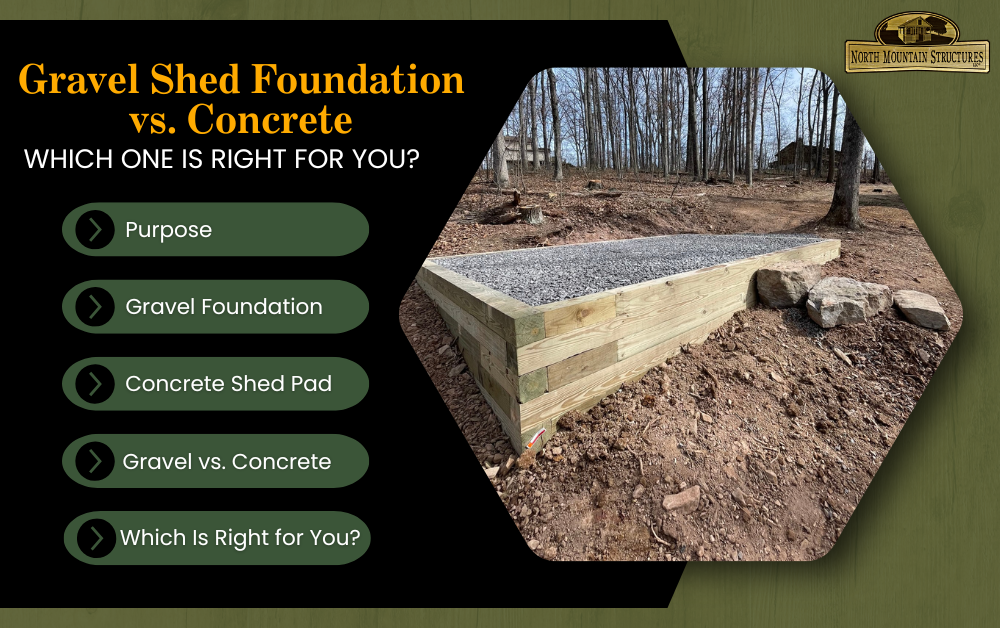
A gravel shed foundation is one of the most recommended bases for standard sheds because it offers excellent stability and drainage while remaining cost-effective. This type of foundation is built using compacted ¾” clean stone and is typically prepared to be 2 feet larger than the shed, creating a 12-inch perimeter of gravel around the building. This perimeter helps water drain away from the structure and reduces moisture-related wear.
Many homeowners also choose to add a 4×4 or 6×6 border around the gravel pad. This frame contains the stone so it doesn’t wash or roll into the lawn. The border is optional and usually depends on personal preference and budget. For yards that are significantly out of level, a gravel shed foundation can also be paired with retaining walls to create a stable, level building site, making gravel one of the most versatile foundation options available.
Benefits of a Gravel Shed Foundation
- Excellent natural drainage
- Lower overall cost compared to concrete
- Fast installation
- Easy to level or adjust
- Suitable for most standard-sized sheds
- Works well on uneven or sloped properties
Potential Drawbacks
- Not ideal for large garages or heavy workshop loads
- Can shift if not properly compacted
- Requires edging or a frame for best long-term performance
Overall, a gravel shed foundation provides a stable, affordable, and adaptable base for most outdoor buildings, especially when drainage and long-term durability are important considerations.
What Is a Concrete Shed Pad?
A concrete shed pad is a solid, permanent foundation made by pouring a reinforced concrete slab, typically 4 to 6 inches thick. Unlike a gravel shed foundation, which relies on compacted stone for drainage and flexibility, a concrete pad creates a rigid surface that supports heavier buildings and equipment. This makes it a popular choice for garages, workshops, and sheds used to store large machinery or vehicles.
Concrete pads require more preparation, including forming, leveling, and reinforcement with rebar or wire mesh. After the concrete is poured, it must cure before the shed can be placed on it, which adds time to the installation process. Because concrete is completely solid, proper drainage planning is also essential to avoid moisture collecting around the base of the structure.
Benefits of a Concrete Pad
- Extremely strong and durable
- Ideal for garages, workshops, and heavy equipment
- Provides a smooth, solid floor surface
- Long lifespan with minimal maintenance
Potential Drawbacks
- Higher cost than a gravel shed foundation
- Longer installation timeline and required curing time
- Poor drainage if not poured with proper slope
- Permanent placement with little flexibility for future changes
A concrete pad is an excellent choice for buildings that need maximum strength and support, but it’s often more than most standard sheds require. The decision ultimately depends on how you plan to use the structure and the level of durability you need.
Gravel Shed Foundation vs. Concrete: Key Differences
When choosing between a gravel shed foundation and a concrete pad, several important factors come into play. Each foundation type offers unique advantages depending on the size of the building, your budget, and how the shed will be used. Understanding these key differences makes it easier to choose the foundation that will best support your structure for years to come.
Cost Comparison
Gravel pads are generally more affordable than concrete. A gravel shed foundation requires fewer materials, less labor, and no curing time, making it the budget-friendly option for most homeowners. Concrete pads, while stronger, come with higher material and installation costs due to forming, pouring, and reinforcement. If cost is a major factor, gravel typically provides the better value.
Installation Time
A gravel shed foundation can often be completed in a single day. Concrete, on the other hand, requires forming, pouring, and several days of curing before it’s ready for use. If you’re planning a quick shed installation or want minimal disruption to your yard, gravel allows for a much faster turnaround.
Drainage and Moisture Protection
One of the biggest advantages of a gravel shed foundation is natural drainage. Water filters through the clean stone instead of pooling around the structure, which helps prevent rot, mold, and long-term moisture damage. Concrete pads do not drain, so proper slope is essential to direct water away. Without that slope, moisture can sit against the shed and cause premature wear.
Longevity and Maintenance
Concrete pads offer exceptional longevity with very little maintenance, making them ideal for heavy-use buildings. Gravel pads can also last for many years when installed correctly, though they may require occasional raking or leveling over time. For most standard sheds, gravel provides more than enough durability.
Best Use Cases for Each
Gravel works well for most garden sheds, storage sheds, greenhouses, and small cabins because it balances cost, drainage, and stability. Concrete is the better choice for garages, large workshops, or sheds that will hold vehicles, heavy equipment, or machinery. Ultimately, the right choice depends on the structure’s size and purpose.
Which One Is Right for You?
Choosing between a gravel shed foundation and a concrete pad ultimately comes down to how you plan to use your building, the condition of your property, and your long-term goals. Each option offers clear advantages depending on the situation.
Choose a Gravel Shed Foundation If:
- You’re installing a standard storage shed, garden shed, or greenhouse
- Drainage is a concern, especially in areas with heavy rainfall
- You want a faster and more affordable installation
- Your yard has uneven or sloped ground
- You want the flexibility to adjust or relocate the shed in the future
- You prefer a foundation that works well with retaining walls or borders
Choose a Concrete Pad If:
- Your shed will function as a garage, workshop, or heavy-use building
- You need a solid, smooth floor for storing vehicles or machinery
- Long-term permanence is a priority
- You want the highest possible weight capacity
- You’re willing to invest more upfront for maximum durability
In many cases, a gravel shed foundation is the right choice for typical backyard sheds because it delivers excellent support, moisture protection, and value. Concrete becomes the better option when the building is larger, heavier, or intended for high-impact use. Understanding your shed’s purpose will help you make the choice that best supports its performance and lifespan.
How North Mountain Structures Helps You Choose the Right Shed Pad
Selecting the right foundation doesn’t have to be overwhelming. North Mountain Structures guides homeowners through the entire process, helping you choose between a gravel shed foundation and a concrete pad based on your property, shed size, and how you plan to use the building.
Our team evaluates your yard’s slope, soil conditions, drainage patterns, and accessibility to determine the most stable and long-lasting option. For most standard sheds, we construct a gravel shed foundation that is built 2 feet larger than the building, creating a clean 12-inch perimeter of stone for superior drainage and protection. If you prefer a more finished look, we can include 4×4 or 6×6 borders to contain the stone and enhance the appearance of the pad.
For properties that are significantly uneven, we can also build retaining walls to establish a level building area before preparing the foundation. And for customers who need a stronger, more permanent solution such as a garage or heavy workshop, we can advise when a concrete pad is the better choice.
No matter which foundation type you choose, our goal is to ensure your shed is set on a stable, durable base that protects your investment and supports your structure for years to come.
Conclusion
Choosing the right foundation is one of the most important steps in making sure your shed lasts for decades. Whether you need the drainage and affordability of a gravel shed foundation or the strength and permanence of a concrete pad, the best choice depends on your shed’s size, purpose, and the condition of your property. With the right base, your shed will stay level, protected, and structurally sound through every season.
If you’re unsure which foundation is right for you, North Mountain Structures is here to help. Contact us today for a site evaluation or a custom quote, and let our team guide you toward the best foundation for your new shed.