When winter arrives, most gardens slow down or come to a complete stop. Snow, frozen ground, and unpredictable weather make it harder to stay hands-on, even for experienced gardeners. That’s where greenhouses change the equation. Rather than being a warm-weather add-on, they provide a dedicated, protected space that stays usable when the rest of your outdoor setup isn’t.
With the right design, greenhouses become a functional winter workspace. They give gardeners room to start seeds, organize supplies, and maintain plants without relying on perfect conditions outside. Built for durability and everyday use, a well-constructed greenhouse allows winter to feel less like a shutdown and more like a season of preparation, progress, and planning ahead.
A Winter Gardening Space That’s Built to Be Used
One of the biggest advantages of a greenhouse in winter is simply having a space that’s designed for ongoing use. Instead of squeezing projects into a garage or waiting for spring, greenhouses give you a dedicated area where gardening tasks can continue at a slower, more manageable pace. The spacious interior makes room for seed-starting trays, planters, and tools without everything feeling cramped or temporary.
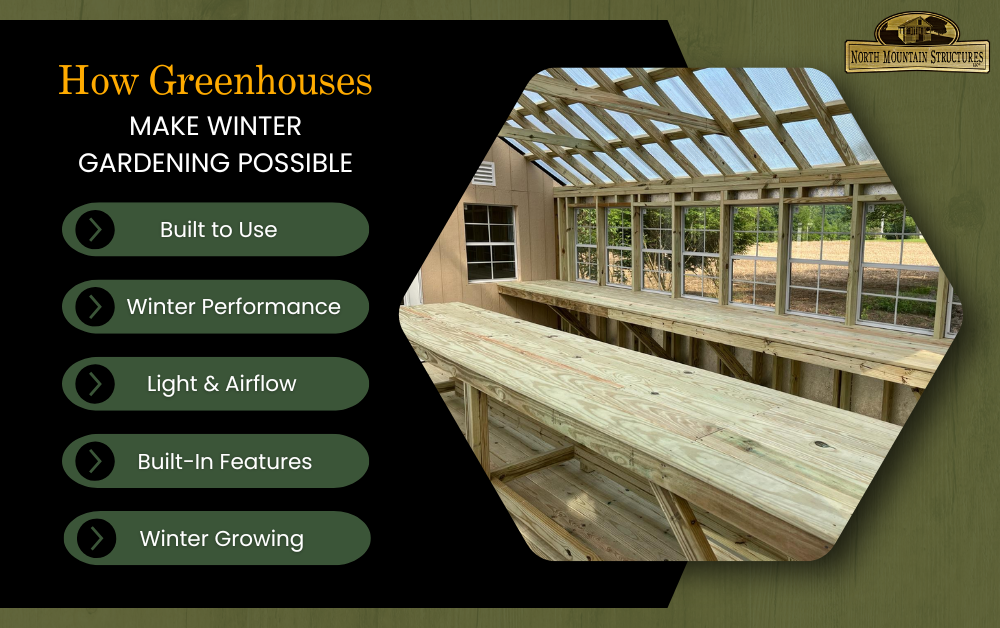
That extra space matters during colder months, when organization and efficiency become more important. Built-in work benches provide a sturdy surface for potting, propagation, and prep work, keeping everything off the ground and within reach. In winter, greenhouses aren’t just protecting plants, they’re supporting the way gardeners actually work, offering a practical environment that stays useful long after outdoor beds are on pause.
How Greenhouse Design Supports Winter Performance
A greenhouse’s ability to function in winter depends far more on its construction than on the season itself. When temperatures fluctuate and daylight is limited, the materials and layout of the structure determine how usable the space actually is from day to day.
Built for Stability, Not Just Shelter
North Mountain Structures greenhouses use a wood-framed build with treated walls and reflective sheathing. This combination helps reduce sudden temperature swings and improves energy efficiency, which is especially important during colder months when conditions can change quickly.
Instead of feeling drafty or inconsistent, the structure supports a more controlled interior environment that’s easier to manage throughout winter.
Smart Roofing for Light and Insulation
The polycarbonate roof plays a dual role during winter. It allows natural light to enter the space while also helping retain warmth better than traditional materials. This balance is what makes winter use practical without overcomplicating the setup.
Benefits of this design include:
- Consistent daylight exposure during shorter winter days
- Improved insulation compared to standard roofing materials
- A brighter, more comfortable workspace for daily tasks
When all of these elements work together, greenhouses stop feeling seasonal and start functioning as reliable, year-round structures.
Managing Light, Airflow, and Ventilation in Winter
Light and airflow don’t stop mattering in winter, they just need to be handled differently. North Mountain Structures greenhouses are designed to take advantage of available daylight through large, functioning windows and a polycarbonate roof that helps distribute light evenly throughout the interior. Even during shorter days, this design keeps the space usable and comfortable instead of dim or inactive.
Maximizing Natural Light During Shorter Days
The combination of multiple windows and a polycarbonate roof allows winter sunlight to reach deeper into the greenhouse. This helps support seed-starting, plant maintenance, and general workspace visibility without relying entirely on artificial lighting. The result is a brighter interior that stays functional throughout the winter months.
Built-In Ventilation That Works Year-Round
Ventilation remains important during winter, especially on clear days when the interior can warm quickly. Gable vents, operable windows, and a built-in exhaust fan allow air to circulate as needed without fully opening the structure to cold weather. This controlled airflow helps manage moisture and keeps the greenhouse comfortable to work in, even as conditions outside fluctuate.
What Makes Our Greenhouses Practical to Use in Winter
Winter use often comes down to convenience. If a greenhouse is difficult to access or awkward to work in, it tends to sit unused until warmer weather returns. North Mountain Structures greenhouses are designed with everyday winter use in mind, making it easier to step inside and get to work without turning simple tasks into a hassle.
Built-In Work Benches for Daily Tasks
Sturdy, pressure-treated wooden work benches line the interior, giving you a reliable surface for potting, organizing supplies, and managing seed-starting trays. Having this workspace built in keeps winter projects contained and organized, rather than spreading tools and materials across temporary surfaces.
Electrical Access for Added Flexibility
Each greenhouse comes pre-wired with a light switch, socket, and electrical outlets. This allows gardeners to easily add lighting, fans, or supplemental heating if needed, without running extension cords or making modifications later. During winter, that flexibility makes the space far more usable, especially on darker days.
Secure, Accessible Entry
A solid wood-framed door with a window provides easy access while maintaining the structure’s durability. The diamond plate threshold adds protection in high-traffic areas, and the locking door helps keep tools and equipment secure. These small details make a noticeable difference in winter, when ease of access determines how often the greenhouse gets used.
What Gardeners Commonly Grow and Work On During Winter
Winter greenhouse use isn’t about maximizing output, it’s about staying productive in ways that make the rest of the year easier. During colder months, most gardeners focus on projects that benefit from a protected, controlled space rather than fast growth or large harvests.
Seed-starting and early propagation are some of the most common winter uses. A greenhouse allows gardeners to start plants gradually without rushing or relying on ideal outdoor conditions. This leads to stronger transplants and a smoother transition into spring.
Other winter greenhouse projects often include:
- Maintaining herbs and leafy greens that don’t require high heat
- Holding plants that need protection through colder weather
- Organizing supplies and prepping containers ahead of the growing season
By using greenhouses this way, winter becomes less of a downtime and more of a preparation period. Instead of starting from zero in spring, gardeners are already several steps ahead.
A Greenhouse That Works Beyond the Warm Months
Winter doesn’t have to mark the end of your gardening routine. With the right structure, it becomes a season for preparation, organization, and steady progress instead of a full stop. Thoughtfully designed greenhouses provide a protected, functional space that stays usable when outdoor conditions make gardening difficult, allowing you to stay engaged year-round.
North Mountain Structures greenhouses are built with durability, usability, and winter performance in mind. From spacious interiors and built-in work benches to proper ventilation and electrical access, every feature is designed to support real use through colder months. If you’re looking to extend your growing season and create a greenhouse that works well beyond spring and summer, explore North Mountain Structures’ portable greenhouse options to find the right fit for your property and gardening goals.